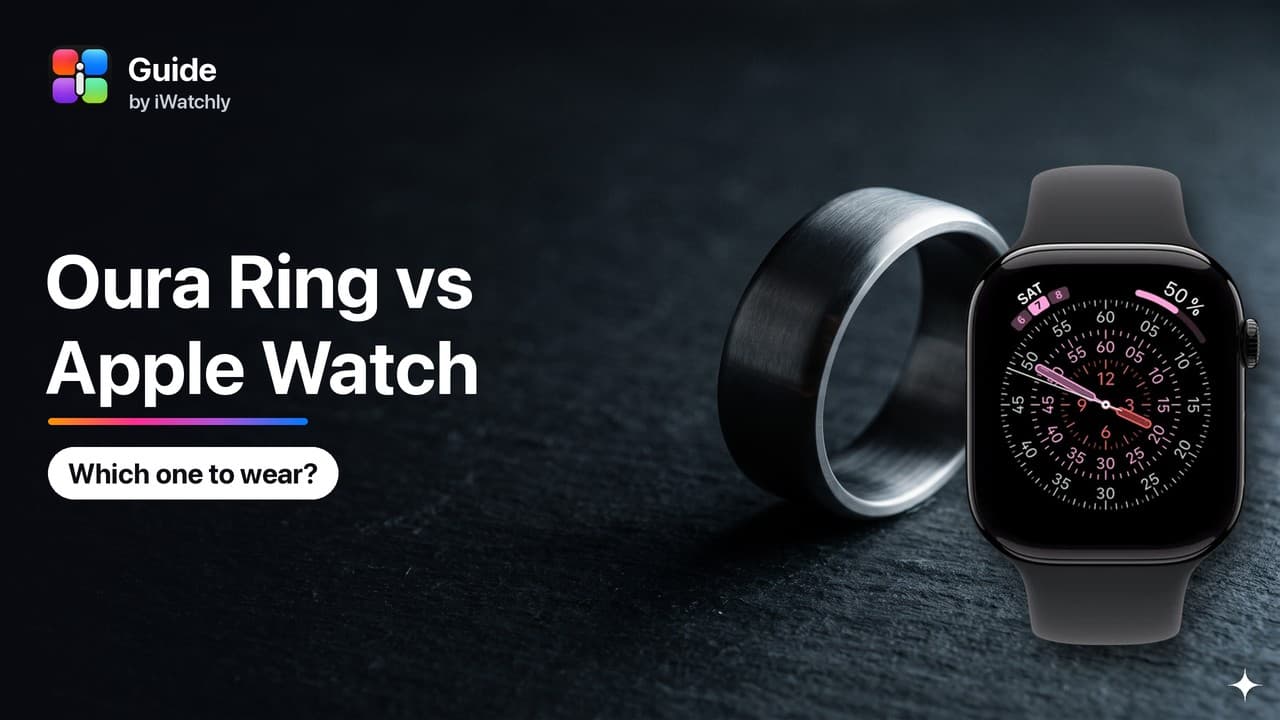
- Apple Watch health
- sleep tracking
- Oura Ring
- readiness
Oura Ring vs Apple Watch: Which One Should You Wear?
By Kalyani Lokireddy
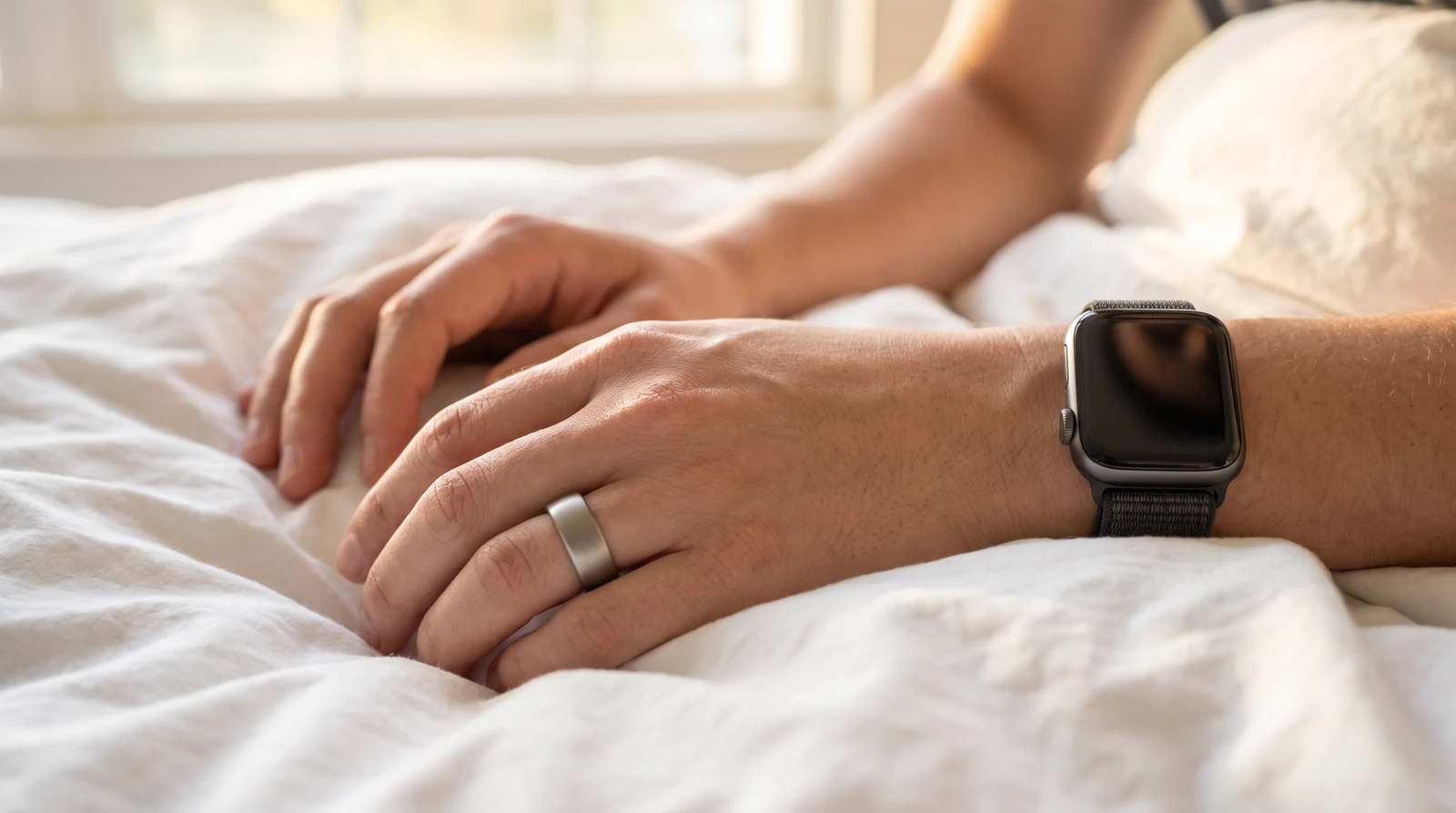
Oura Ring is a screenless ring for sleep and recovery that you forget you are wearing. Apple Watch is a watch with a screen, apps and FDA-cleared heart and sleep alerts. If sleep tracking is the whole point and you hate wearing a watch to bed, Oura. If you want one device that does everything, including the sleep, Apple Watch.
What is the real difference?
Oura Ring 5 weighs from 2 grams, has no screen and no GPS, and runs six to nine days on a charge. Overnight it measures heart rate, heart rate variability, breathing rate, skin temperature and blood oxygen, then gives you three daily scores: Sleep, Readiness and Activity. Its 2026 software added Blood Pressure Signals, a 30-day view of night-time breathing, and live pace and distance from your phone.
Apple Watch measures the same things on your wrist and shows them there. It adds an ECG, hypertension and sleep apnea notifications, GPS, payments, calls and apps. The Series 12 and Ultra 4 have a Readiness score that does what Oura's does. The cost is the battery: up to 24 hours on the Series 12, 50 on the Ultra 4.
What does Oura cost?
Ring 5 starts at $399 in Black or Silver and $499 in the other finishes. On top of that, the app needs a membership at $5.99 a month. Without it you only see the three daily scores, nothing underneath them. Ring 4 is still sold from $349 with the same membership.
Apple Watch is a one-off purchase. Sleep stages, the Sleep Score, ECG and the health notifications are included with the watch.
Which tracks sleep better?
Both record how long you slept and your Awake, REM, light and deep stages. In a 2024 study funded by Oura, the ring matched a sleep lab a few points more often than Apple Watch on four-stage sleep. Reviewers who wore both for months say the nightly totals are close and the ring wins on comfort: nothing on your wrist, nothing to charge every day.
Apple Watch wins on what it can warn you about. It can notify you of possible sleep apnea, which is cleared by the FDA, and of signs of chronic high blood pressure. Oura's breathing and blood pressure views are trends to show a doctor, not alerts. Here is how to set up Apple Watch sleep tracking.
Who should pick which?
Pick Oura if sleep and recovery are what you care about, you do not want a screen, and you are happy to pay monthly. Pick Apple Watch if you want notifications, workouts with GPS, payments and the health alerts, or if you already wear one and do not need a second gadget. Choosing between models? Answer five questions.
Q: Can I wear Oura Ring and Apple Watch together? A: Yes. Many people wear the watch by day and the ring at night. Both write to Apple Health, so your sleep ends up in one place.
Q: Does Oura Ring work with iPhone? A: Yes. The Oura app runs on iPhone and syncs with Apple Health. The ring has no screen, so everything is read on the phone.
Q: Is the Oura membership required? A: To see anything beyond the three daily scores, yes. The ring keeps working, but the detail stays locked.
Read next
WHOOP vs Apple Watch: Which One Should You Wear?
Compare price, battery, sleep and recovery scores and health alerts, then pick the one that fits how you actually live.
3 min read
Apple Watch Sleep Tracking: How to Set It Up and Read the Results
Turn on sleep tracking in five steps, then read your sleep stages, Sleep Score and overnight vitals the next morning.
3 min read
Apple Watch Sleep Score and Hypertension Notifications, Explained
How the nightly score is built from three parts, what a hypertension alert does and does not mean, and which watches can do each.
4 min read